Article 1

Understanding Chemicals, Fragrances & Safer Choices for Your Family

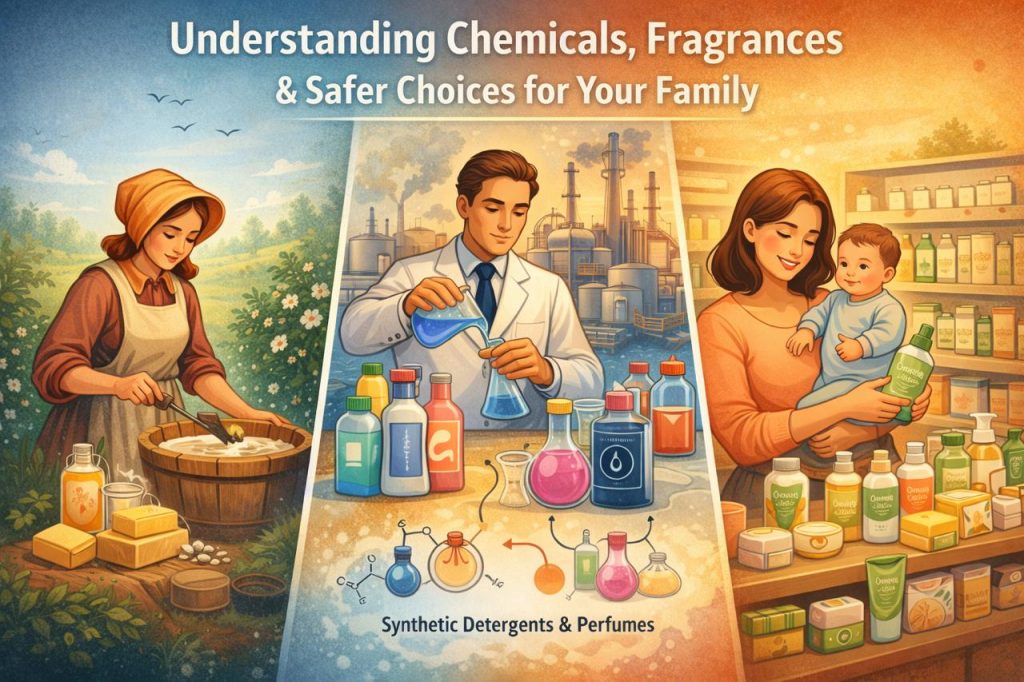
Before “modern cosmetics & detergents,” most products used in daily life were plant/animal-based

For centuries, families cleaned and cared for skin using soap made from fats/oils + ash/alkali, botanical infusions, waxes, and simple powders. These worked—but they were inconsistent in quality, didn’t always perform well in hard water, and scaled poorly for mass production.

Understanding Chemicals, Fragrances & Safer Choices for Your Family

The Birth of Synthetic Chemicals

From the late 1800s through World War I and especially after World War II, oils and fats were urgently needed for food supplies, so chemists in Germany began developing synthetic surfactants (Cleaning agents) derived from coal and later petroleum to replace soap. 

Those synthetic surfactants offered stable performance, strong cleaning power, independence from agricultural supplies, and lower production cost which allowed to offer cheaper detergents obeying this way to the new consumer economy demanding products that were cheap, stable on shelves, strongly scented, and uniform with long shelf lives.

After WWII, petroleum-industry feedstocks helped synthetic detergents expand fast and overtake soap in many markets; this shift toward petrochemical ingredients is better explained by economics, scale, shelf-life, and industrial supply chains, plus evolving regulation and marketing.

This explosion in petroleum refining capacity and rapid growth in synthetic chemistry was made easy with the infrastructure of the oil empire that John D. Rockefeller built.

This is a major reason why detergents and many cosmetics shifted toward petrochemical inputs. 

The Birth of Synthetic Fragrances

Natural perfumes historically relied on flowers and essential oils, which were:

Expensive

Limited In Supply

Unstable In Formulations

Soon after, chemists learned to reproduce aroma molecules artificially.

Synthetic fragrances allowed:

Identical Scent Worldwide

Longer-Lasting Smell

Dramatically Lower Cost

By the mid-20th century, synthetic fragrance became standard in detergents and cosmetics because petrochemical ingredients enabled something new in history: everyday personal care products became affordable to almost everyone.

They allowed brands to create:

Foaming Shampoos

Long-Lasting Perfumes

Stable Creams

Powerful Detergents

From an industrial perspective, this was a success story; nowadays many synthetic chemical and artificial fragrances and perfumes have be hazardous, and now mothers and families have started to go back to the roots, using organic / natural products especially for babies and children, even if more expensive.

Click the logos below to explore expert resources and learn more.

Trusted References

Article 2

WHY IT MATTERS

THE SILENT EXPOSURE: What Children Are Exposed to Every Day
— Without Parents Realizing

Children’s developing systems make them more sensitive to repeated exposure.

 Modern families live in the cleanest homes in human history; our children wear freshly washed clothes, sleep on soft sheets, bathe with gentle-looking products, and grow surrounded by comforting scents that promise purity and care.

Yet something important has quietly changed over the past decades!

Many everyday products — cosmetics, detergents, home cleaners, and fragrances — are now formulated using complex synthetic ingredients designed for performance, stability, and long shelf life.

Most parents never notice this change because exposure does not happen in one dramatic moment, it happens silently… every single day!

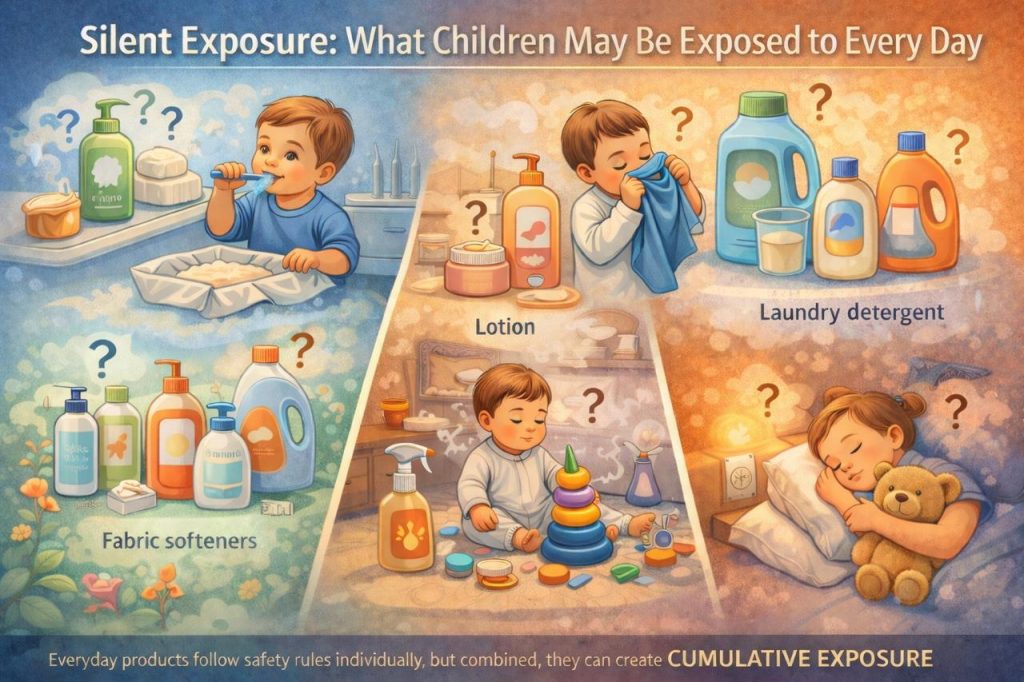
Let’s go through a normal day in a child’s life➜ From morning to bedtime, a child may come into contact with:

Shampoo

Lotion

Wipes

Toothpaste
Laundry

Fabric Softener
Cleaning Products
Air Fresheners
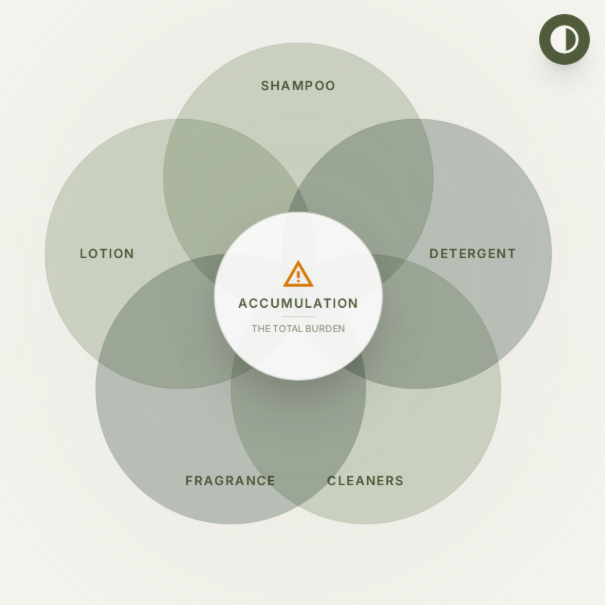
Cumulative Exposure

Each product alone may meet regulatory safety standards, but together, they create what scientists call cumulative exposure — repeated contact with multiple substances over time.

Why for adults, this may be tolerated easily, for babies and children, whose bodies are still developing, this raises a concern about how much exposure is truly necessary or whether this synthetic exposure is necessary?

Children are not simply small adults, children are sensitive!

Scientific and pediatric research shows that:

  • A child’s skin barrier is thinner and absorbs substances more easily.
  • Organs and hormonal systems are still developing.
  • Exposure relative to body weight is higher than in adults.

Early life is a window of rapid development — and many pediatric health organizations urge minimizing unnecessary chemical exposure during this critical period, as a precaution.

One of the largest contributors to daily exposure is something most people associate with cleanliness:

SCENT!

It Smells Clean — But Is It?

The familiar “baby smell,” laundry freshness, or long-lasting cosmetic fragrance is often created through synthetic fragrance mixtures; fragrance serves no protective or nutritional function for the skin, its purpose is emotional — to signal freshness and comfort.

Many parents are surprised to learn that a single word on a label — Parfum or Fragrance — may represent a complex mixture of many chemicals rather than a single ingredient. This blend may include allergens and sometimes chemicals of concern, making it one of the most common triggers of skin sensitivity and irritation in young children.

Pediatric advice is clear: when in doubt, choose fragrance-free.

Modern products are engineered to foam more, last longer, smell stronger, and remain stable for years. These qualities are convenient — but they often require additional chemical processing or synthetic components. Are all these additions truly necessary for a baby?

A growing number of parents are no longer waiting for regulations to catch up. They are choosing simplicity over excess and adopting what is known as the precautionary principle:

 If a safer alternative exists — especially for children — choose the safer option.

Allergens

Fragrance mixtures may contain known allergens that can trigger reactions on delicate, developing skin.

Chemicals of Concern

Some fragrance ingredients include substances flagged by health organizations as potentially harmful with repeated exposure.

Skin Irritation

Fragrance is one of the most common causes of irritation and sensitivity in babies and young children.


 This does not mean eliminating modern life. It means reducing avoidable exposure where possible — because health is rarely shaped by one product or one moment. It is shaped by thousands of small daily decisions: nutrition, environment, stress, and increasingly, product exposure.

The new generation of conscious parents describes this choice not as buying products — but as buying peace of mind.

Click the logos below to explore expert resources and learn more.

Trusted References

Article 3

Safety Begins With Knowledge

AWARENESS FOR MOTHERS

Small Daily Choices. Long-Term Protection.

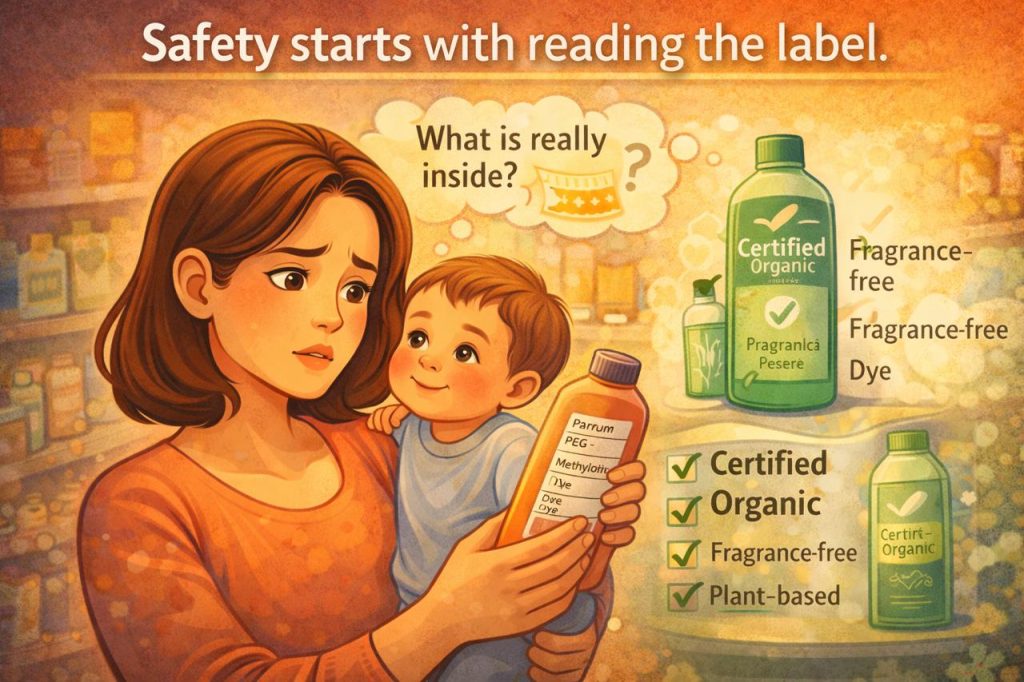
Every mother wants to believe that products sold for babies are automatically the safest available, but beautiful packaging, a trusted European origin, or a famous brand name can create reassurance; a brand’s reputation does not guarantee the simplicity or gentleness of its ingredients.

Today, parents are discovering that real safety begins not with brand loyalty — but with understanding what is inside the bottle.


Why famous brands should not be trusted blindly?

Most large cosmetic and detergent brands are designed for:

Long Shelf Life

Extended stability often depends on added preservatives that may not be essential for babies.

Strong Fragrance Identity

Signature scents can rely on synthetic fragrance blends rather than simplicity.

Mass Production

Global scale prioritizes efficiency and uniformity over individualized gentleness.

Uniform Performance Worldwide

Formulas are engineered for consistency across markets, not minimal exposure.
To achieve this, formulas may include synthetic fragrances, stabilizers, preservatives, and processing ingredients that are legally allowed — but not always necessary for babies or children.

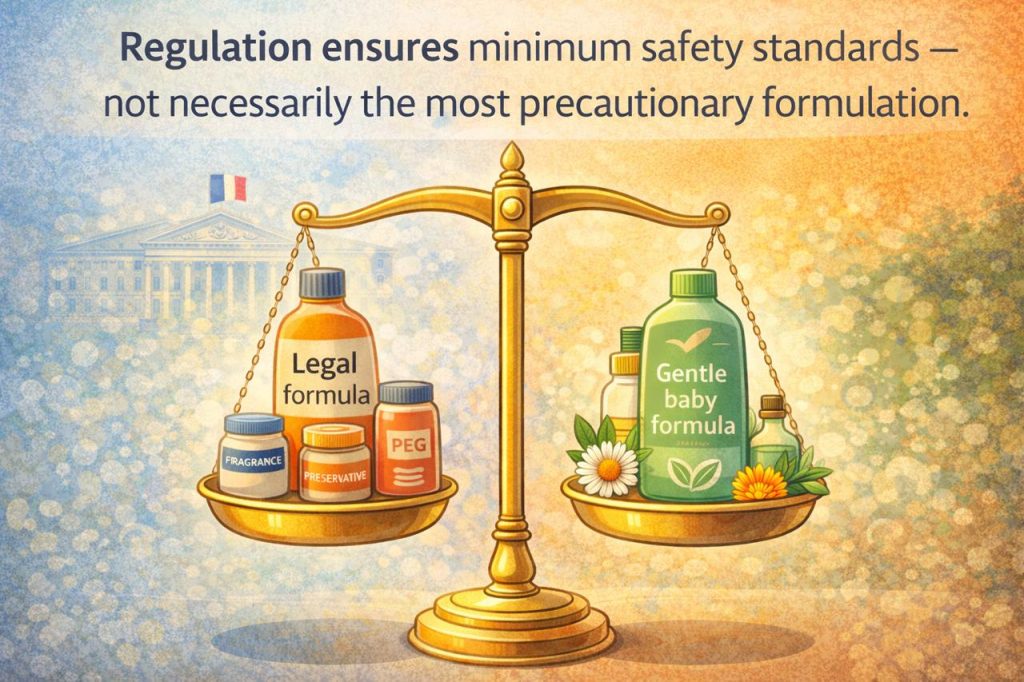
Regulations ensure products meet safety standards under normal use, but they do not require companies to choose the most minimal or precautionary formulation, this is why two baby products can both be legal — yet very different in ingredient philosophy.

Nowadays a mother’s role has to change from consumer to informed protector, and reading labels is no longer optional — it is an act of care.

Why ingredient awareness matters for long-term health?

Children are exposed daily to multiple products:

Shampoo

Creams

Wipes

Detergent

Fabric Softener

Scented Environments

Even when each product individually meets regulations, repeated exposure over years is something many families now prefer to minimize.

Scientific discussions around endocrine disruptors, allergens, and indoor air quality have encouraged many parents to adopt a precautionary approach, especially during early development.

This approach does not assume products cause disease — but seeks to reduce avoidable risks that may contribute to long-term health concerns.

For many families, this includes reducing exposure to ingredients suspected of irritation, hormonal interference, or substances studied for links to serious health outcomes.

Why choose certified-organic products?

One of the biggest sources of confusion is marketing language; words like natural, gentle, dermatologically tested, hypoallergenic are often marketing terms and may not guarantee strict ingredient standards.

The word “Organic” is different — when certified; In regulated certification systems (EU organic cosmetic standards such as COSMOS, AIAB, Ecocert, etc.):

Certified Standards

Ingredient sourcing is audited to ensure it meets established organic certification standards.

Many petrochemical-derived ingredients are restricted or prohibited under certification rules.

The use of synthetic fragrances is limited or controlled according to certification criteria.

Traceability and transparency are required throughout the supply chain to comply with certification standards.

Only products meeting certification criteria are allowed to display certified organic claims according to certification rules, this gives parents an additional layer of verification beyond marketing promises.

How to choose a safer product for babies and children?

Do not assume safety because a product is famous or expensive.

1
  • Shorter Ingredient Lists
  • Clear Plant-based Ingredients
  • Minimal or No Synthetic Sragrance
2

Check for recognized certification logos or clear organic claims supported by certification bodies.

3

Babies do not need perfume to be clean.

4

Brands that explain ingredients openly usually prioritize formulation philosophy over marketing illusion.

5

Why some parents choose organic even if it costs more?

Organic-certified products often require:

  • Stricter raw material sourcing
  • Certified agriculture
  • Smaller production volumes
  • More controlled formulation standards

For many families, this is not viewed as a luxury purchase but as a long-term investment in peace of mind; just as parents carefully choose food quality, many extend the same care to products touching their children’s skin every day.

Click the logos below to explore expert resources and learn more.

Trusted References

Article 4

REGULATION & SAFETY

Why Regulations Still Allow “Harsh” Chemicals
(Even When Parents Don’t Want Them)?

Understanding why some ingredients remain legally allowed in baby and household products — and why many parents still choose to avoid them.

Why choose certified-organic products?

Every parent wants the same thing: A safe home and healthy children.

For decades, modern cosmetics, detergents, and baby products have promised cleanliness, softness, and pleasant fragrance. Many of these products come from famous European brands trusted worldwide.

So, a very natural question arises:

“If these products were dangerous, how could they be legally sold — especially in countries like France with strict regulations?”

“If they are legal, why aren’t they the safest choice?”

Regulators evaluate chemicals mostly individually, but families are exposed to many products every day:

  • shampoo
  • wipes
  • lotion
  • laundry detergent
  • fabric softener
  • room fragrance

Combined exposure is harder to measure precisely.

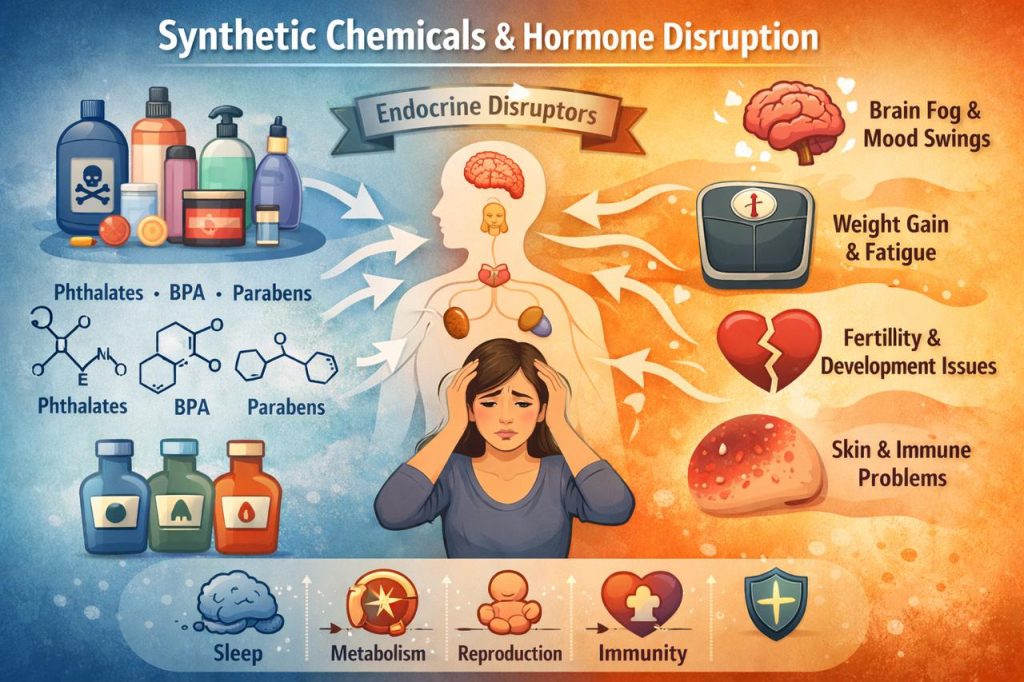
Research continues to investigate substances known as endocrine-disrupting chemicals (EDCs) — compounds that may interfere with hormonal systems.

Medical and pediatric sources note that substances such as phthalates and some preservatives used in personal care products can affect hormonal signaling, especially relevant during childhood development.

Regulation often changes after new evidence accumulates — which is why ingredients once allowed are sometimes later restricted or banned.

Babies are biologically different:

  • Thinner skin barrier
  • Developing lungs and immune systems
  • Higher exposure relative to body weight

Pediatric guidance frequently recommends choosing fragrance-free products and minimizing unnecessary chemical exposure for children.

Many countries regulate cosmetics using risk-based rules, not “zero risk.”

That means an ingredient may be allowed if regulators believe exposure is within “safe” limits—yet parents may still prefer to avoid it because:

  • Babies’ skin can be more sensitive
  • Families use many products daily (combined exposure)
  • Regulations may not fully capture mixtures, long-term low-dose exposure, or new science fast enough

Legal” does not always mean “the best choice for my baby.

The Mother’s Ingredient Watchlist

Below are ingredient categories many parents choose to avoid due to cancer hazard classifications, contamination concerns, endocrine disruption concerns, or strong irritation/allergy potential. This is a precautionary list, not a diagnosis tool.

PFAS are highly persistent and widely discussed by regulators; Europe has active restriction processes and ongoing regulatory action.

1) Formaldehyde & formaldehyde-releasing preservatives

Why avoid them? formaldehyde is classified as carcinogenic to humans; it can also trigger irritation/sensitization.

Label clues: “formaldehyde,” “methylene glycol,” and some “formaldehyde releasers” (often discussed in safety literature), though exact naming varies by region.

2) 1,4-Dioxane (a contaminant, not usually listed on labels)

Why avoid it? 1,4-dioxane is a manufacturing byproduct found in some personal care and cleaning products, and is classified by major bodies as a carcinogenic concern (animal evidence; regulatory warnings).  

Label clues (because it’s often not listed): watch for heavily ethoxylated ingredients like “PEG-…”, “-eth”, “polyethylene,” etc. (This doesn’t guarantee it’s present; it’s a risk flag.)

3) Benzene (as an impurity/contaminant in some product types)

Benzene is a well-known human carcinogen; in cosmetics it’s not used as a normal “intentional ingredient,” but contamination events are a concern. For hazard classification context, IARC lists carcinogenic agents and benzene is among well-established carcinogens.  

Hormone disruption is especially relevant to parents because early-life exposures can matter. Global and medical organizations recognize endocrine disruptors as a public health concern.

Common parent “avoid/reduce” categories include:

  • Phthalates (often associated with fragrance systems and plastics; can be hard to spot on labels when hidden under “fragrance/parfum”).
  • Certain parabens (used as preservatives; often debated—some parents choose paraben-free as a precaution).
  • Triclosan (antibacterial ingredient; some bodies focus more on resistance and endocrine signals than cancer classification; many parents avoid it in routine family products).  

Pediatric guidance also encourages choosing products without phthalates/parabens/triclosan and avoiding synthetic fragrance when possible.

Methylisothiazolinone (MI)

Associated with allergic contact dermatitis; EU moved to restrict/ban MI in leave-on products and tightened limits due to sensitization concerns.

“Fragrance/parfum” can represent a mixture of many chemicals; it may include allergens and sometimes chemicals of concern, and it can be a major irritant trigger—especially for babies and sensitive skin. Pediatric advice often says: if unsure, choose fragrance-free.

How to Know if a Baby/Kids Product Is Truly “Safer”?

Don’t shop by brand fame

A famous brand can still use fragrance, harsh preservatives, high-allergen systems, unnecessary dyes, or adult-friendly formulas, while pediatric guidance advises choosing fragrance-free products and avoiding certain chemical classes for children.

Choose organic 100% plant-based products

Understand that “natural” is often vague and unregulated, “organic” (if certified) follows audited standards with ingredient limits, and the safest choice combines certification, full ingredient disclosure, and conservative formulation.

Avoid heavy scent layering

Use naturally scented or fragrance-free home cleaners and minimize multiple scented products, especially around babies.

Article 5

Endocrine Health Insight

Synthetic ingredients and hormone disruption

How everyday exposures can affect growth, development, and long-term health

What hormones normally regulate ?

When hormones get disrupted, the body’s internal communication system stops working in balance. Hormones act like chemical messengers — they control growth, metabolism, mood, sleep, fertility, immunity, and even brain development.

When this system is disturbed (called hormonal imbalance or endocrine disruption), many body functions can slowly go off track.

Pediatric advice is clear: when in doubt, choose fragrance-free.

Hormones produced by glands (thyroid, adrenal, pancreas, ovaries/testes, pituitary) control:

  • Energy and metabolism
  • Brain development and mood
  • Growth and puberty
  • Fertility and sexual health
  • Sleep cycles
  • Weight regulation
  • Immune response
  • Skin and hair health


  • Anxiety or depression
  • Irritability or mood swings
  • Brain fog
  • Poor concentration (especially in children)
  • Sleep disturbances

Hormones like cortisol, serotonin, thyroid hormones, and estrogen strongly affect brain chemistry.

  • Unexpected weight gain or difficulty losing weight
  • Fatigue and low energy
  • Blood sugar instability
  • Increased risk of insulin resistance or diabetes

Thyroid and insulin signaling are especially sensitive.

In women and girls

  • Irregular periods
  • PMS worsening
  • Fertility issues
  • Early puberty in children

In men and boys

  • Reduced testosterone
  • Lower sperm quality
  • Delayed or altered puberty

Hormone disruption during childhood is particularly important because development is still ongoing.

  • Increased allergies or sensitivities
  • Chronic inflammation
  • Autoimmune tendencies

Hormones help regulate immune balance.

  • Acne or eczema
  • Hair loss or abnormal hair growth
  • Dry skin
  • Increased body odor sensitivity

Over years, persistent imbalance may contribute to:

  • Obesity
  • Thyroid disorders
  • Fertility problems
  • Metabolic syndrome
  • Certain hormone-related cancers

Common triggers include:

  • Chronic stress
  • Poor sleep
  • Ultra-processed foods
  • Environmental pollutants
  • Endocrine-disrupting chemicals (EDCs) found in some plastics, detergents, cosmetics, and synthetic fragrances
  • Pesticides and petrochemical derivatives

Some chemicals can mimic hormones or block hormone receptors, confusing the body’s signaling system.

Why children are more vulnerable?

Because their bodies are still developing, children are especially vulnerable to chemical exposures.

  • Absorb chemicals faster
  • Have developing organs and brains
  • Detox systems are immature
  • Experience effects that may appear years later

Small exposures repeated daily matter more than one large exposure.

Signs that may suggest imbalance

The encouraging part

The endocrine system is very responsive — when triggers are reduced, balance often improves.

Helpful Habits

Click the logos below to explore expert resources and learn more.

Trusted References